
Starting your pastry journey can feel both exciting and overwhelming, especially if you’ve never baked before. The world of tarts, cakes, and delicate pastries can seem daunting, but with the right guidance, you can learn to bake like a pro from the comfort of your own kitchen. In this guide, we’ll walk you through the essential steps to get started, from understanding ingredients to mastering basic techniques. With patience and practice, you’ll be well on your way to creating professional-level pastries.
Step 1: Understand the Basics of Pastry Making
Before you dive into recipes, it’s important to familiarize yourself with the basics of pastry making. Baking is as much a science as it is an art. Knowing how different ingredients work together will give you a solid foundation. Here are a few key ingredients you’ll be using frequently:
- Flour: The backbone of most pastries. All-purpose flour works for most recipes, but you may also use pastry or cake flour for lighter textures.
- Butter: Adds richness and flakiness to your pastry. Cold butter is essential for creating flaky layers in pies and croissants.
- Sugar: Not just for sweetness! Sugar helps create structure and a golden-brown color during baking.
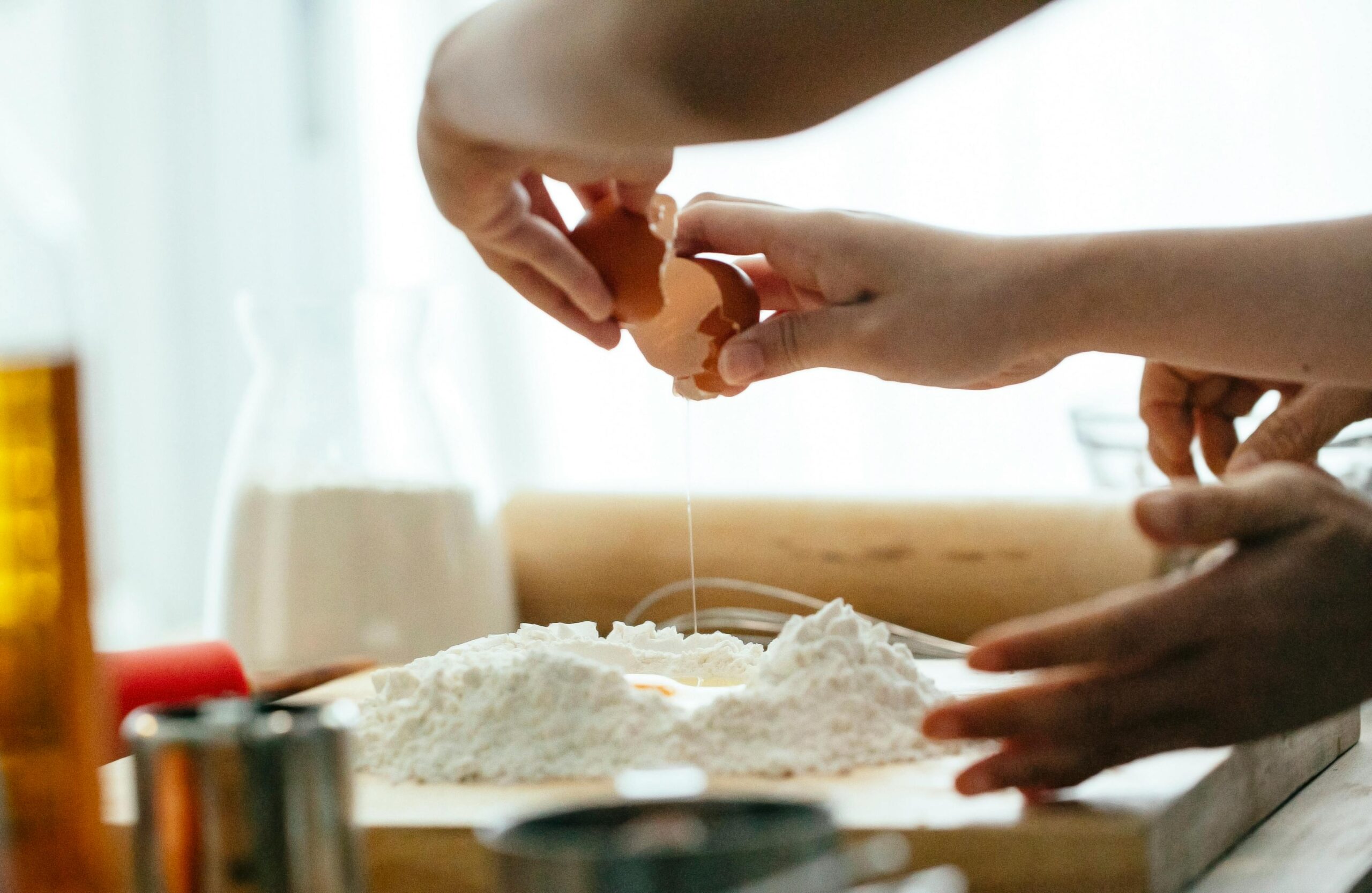
- Eggs: Eggs provide moisture, structure, and richness. They also help bind ingredients together.
- Leavening Agents: Baking powder and baking soda help your pastries rise, while yeast creates a light, airy texture in bread-based pastries.
Understanding how these ingredients work together will set you up for success, so take the time to get comfortable with them.
Step 2: Get the Right Equipment
As a beginner, you don’t need an entire commercial kitchen to start baking. You can create beautiful pastries with just a few key tools:
- Mixing Bowls: A few good-quality bowls will help you mix ingredients without making a mess.
- Measuring Cups and Spoons: Accurate measurements are critical in baking, so invest in a set of dry and liquid measuring cups.
- Rolling Pin: Essential for working with dough, a rolling pin ensures an even thickness for tarts and pie crusts.
- Baking Sheets and Pans: Having a variety of baking sheets, pie dishes, and muffin tins will make it easier to try out different recipes.
- Whisk and Spatula: These tools help you combine ingredients smoothly and scrape every last bit of dough or batter.
While fancy gadgets can be helpful, you can start with these essentials and add more as you progress.
Step 3: Start with Simple Recipes
If you’re new to baking, it’s best to start with simple recipes that don’t require advanced techniques. Here are a few beginner-friendly ideas:
- Shortbread Cookies: These cookies require only a few ingredients and can teach you how to work with butter and flour to create a crumbly, melt-in-your-mouth texture.
- Basic Pie Crust: Learn how to make a simple dough and use it for both sweet and savory pies.
- Cupcakes: A simple, straightforward recipe that allows you to practice mixing, baking, and decorating.
- Fruit Tarts: Easy to make and visually stunning. You’ll get the chance to work with pastry dough and custard.
By starting with simpler recipes, you can build confidence and gain a better understanding of the baking process.
Step 4: Master Essential Techniques
Once you’re comfortable with basic recipes, it’s time to focus on mastering the key techniques that will take your baking to the next level:
- Proper Mixing: Overmixing dough can result in tough pastries, while undermixing can lead to uneven texture. Practice mixing ingredients until they just come together to avoid both issues.
- Chilling Dough: Many pastry recipes require you to chill dough before baking. This step is crucial for achieving the right texture. Don’t skip it!
- Rolling Out Dough: For uniform pastries, make sure to roll your dough evenly. Use a rolling pin to flatten the dough into the desired shape and thickness.
- Baking Time: Timing is everything when it comes to baking. Always follow the recipe’s suggested baking time, but be prepared to adjust based on your oven. Every oven is different!
Step 5: Learn from Professionals
While learning at home, it’s helpful to learn from professionals who can guide you through advanced techniques and give you insider tips. A professional pastry course can teach you how to master these techniques, provide detailed feedback on your work, and even help you troubleshoot when things don’t go as planned. Whether you’re baking for fun or considering a career in pastry, professional courses help accelerate your learning and give you hands-on experience.
Conclusion:
Baking pastries from scratch doesn’t have to be intimidating. By starting with the basics, practicing essential techniques, and learning from experts, you can gradually build your skills and gain confidence. Most importantly, remember that baking is a journey, not a race. Each recipe you try, and each mistake you make, is an opportunity to learn and improve. So, grab your apron, roll up your sleeves, and start creating delicious pastries today!